
Marion/Walthall Release Paths
Marion/Walthall is a regional correctional facility, not a simple municipal holding cell and not a stand-alone state penitentiary. The official MDOC facility page places it in the state’s regional system. MDOC explains that regional facilities operate through the respective sheriff structure, with a sheriff-appointed warden and state oversight, and may hold state prisoners. Local audit material also reflects inmate-housing agreements. The mixed role makes the custodian at departure the key fact.
A local detainee can leave after bond, dismissal, time served, a judge’s order, or a handoff. The Marion County jail docket and booking or release record document that local event. An MDOC prisoner can leave on parole, earned-release supervision, final sentence discharge, or transfer within the state system. Those outcomes require MDOC records. A federal, immigration, other-county, or state transfer is continued custody, even though the person physically left South Main Street.
| Departure | First record | Next check |
|---|---|---|
| Local bond or time served | Marion jail docket | Court order and release sheet |
| Parole or ERS | MDOC status | Parolees Search, VINE, supervision office |
| Final MDOC discharge | Discharge certificate | MDOC Records |
| Transfer or detainer pickup | Destination field | Receiving agency locator |
Confirm Marion/Walthall Release
Begin with the last known custody authority. The sheriff’s inmate-records page covers people currently held. A missing name does not establish a community release. It can also reflect transfer, another booking, spelling variation, a data update, or a technical problem. Preserve the name spelling and search time before moving to the record custodian.
- Ask whether the person was held under local authority or an MDOC sentence at departure.
- For local custody, request the permanent jail-docket entry, release sheet, actual discharge time, release authority, and destination.
- For state custody, search MDOC by exact number when possible, then compare identity, location, sentence, and status.
- Check Mississippi VINELink for the matching agency and event, but reconcile the alert with the source record.
- Use the court order for legal authority and the custody record for the actual exit or handoff.
MDOC’s Tentative Release Date is an estimate, not proof of exit. Parole and earned-release supervision both involve community status under continuing authority; final discharge ends the relevant sentence jurisdiction. If a transfer appears, follow the named recipient. The full Marion County released-inmate search covers county, state, federal, and immigration contingencies.
Marion/Walthall Release Contact
The facility’s verified contact is appropriate for facility routing and present-custody questions. A historical county release record is requested through the sheriff’s administrative records route, while sentence-time and discharge records belong to MDOC. No official source promises disclosure of protected case details by telephone.
Marion/Walthall County Correctional Facility503 South Main Street
Columbia, MS 39429
601-736-3621
For county records, use the official sheriff form and mail it to Marion County Sheriff’s Office, 219 Broad Street, Columbia, MS 39429. The administrative phone is 601-736-5051. Ask for the existing docket and release documents, not a new narrative. For state time, jail credit, eligibility, or a discharge certificate, contact MDOC Records at P.O. Box 24388, Jackson, MS 39225, 601-933-2889, or MDOCRecordsDepartment@mdoc.state.ms.us.
The official Marion/Walthall source page can be checked before calling:
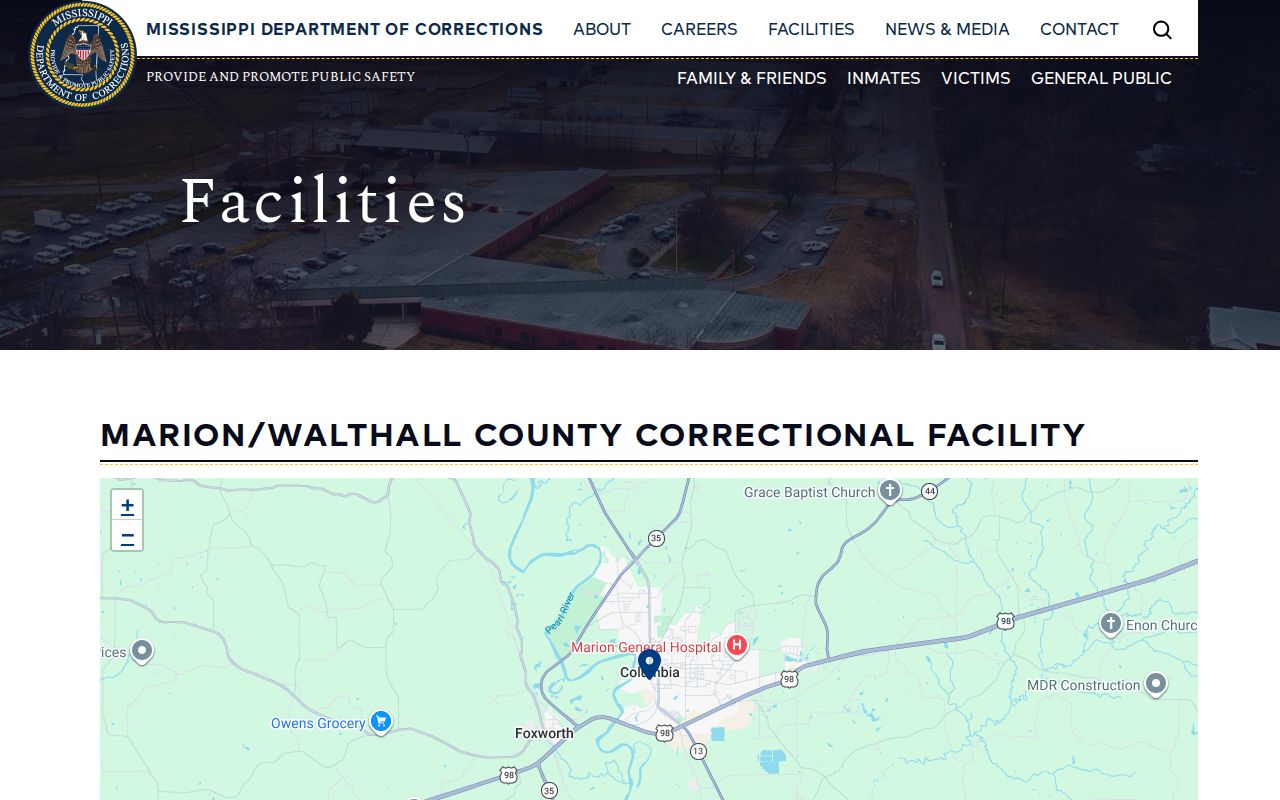
That page confirms the regional-facility identity and contact, while the underlying release record still comes from the authority that held the person.
Marion/Walthall Regional Custody
The facility’s regional status is Marion County’s most important release distinction. Two people can leave the same building through different legal systems. A locally booked person may return to the community once a bond or court condition is processed. An MDOC prisoner may begin parole or ERS, complete a sentence, or move to another correctional location. Physical movement alone does not select the right answer.
County financial records describing inmate-housing agreements reinforce this shared institutional role. They do not supply release hours, a capacity figure for use here, or a promise about who is housed on a specific day. Record language controls. “Transferred” identifies continuing custody. “Paroled” identifies conditional release under Parole Board authority. “ERS” is earned-release supervision, during which the person retains inmate status under MDOC jurisdiction. “Discharged” should be tied to an official discharge record rather than inferred from a past estimate.
Marion/Walthall Exit Details
No official local source located for this project publishes a release-desk schedule, daily release time, weekend policy, property-return process, family waiting area, taxi rule, rideshare rule, or transportation arrangement for Marion/Walthall. Those facts must not be borrowed from Marion County, Florida, or another state. The prominent marionso.com results belong to Florida and do not govern Columbia, Mississippi.
When timing matters, ask what each timestamp represents. A court order may be entered before bond is posted and verified. A jail release authorization may precede the physical exit. A VINE event may follow the source-system update. MDOC can require case-manager and travel-plan validation. A difference of hours is not automatically an error, but the actual discharge time should come from the jail docket, census or release log, or official MDOC record as applicable.
Note: Call the verified Mississippi office for current procedure because no public release-time promise was found.
Marion/Walthall Historical Records
Mississippi’s county retention schedule creates a strong historical path after the current roster loses a name. GSC 08-12, the jail docket, is permanent and includes the date of discharge. GSC 08-13, the inmate case file, is kept for 25 years after release. GSC 08-11, the jail census or meal log, can contain release time and is retained for three years after audit release. These schedules show expected retention, not that every field is nonexempt.
A focused request should seek the docket first, then the case file for release authority, destination, or fuller booking material. For recent physical timing, add the census or release-time entry. For a disputed bond event, ask for the cash-bond docket or receipt and the court’s bond order. Request a cost estimate and nonexempt electronic portions. This durable record route is more useful for historical Marion/Walthall releases than treating a current-only vendor roster as an archive.
Marion/Walthall Court Authority
Court and jail records answer different questions. Marion Justice Court handles initial stages of many local cases, while Circuit Court supplies felony dispositions and later orders within its jurisdiction. A bond order authorizes release after its conditions are met, but the custody record establishes whether and when the person left. A dismissed charge also does not resolve another open hold.
Ask for all known case numbers. One matter may end while another keeps the person confined. Pair the court docket with the jail discharge entry and any receiving-agency record. That three-part check separates legal authority, physical departure, and continued custody.
Justice Court holds jail sessions three times each week to support timely initial appearances. That local rhythm can explain when bond authority first appears, but it is not a public release schedule. Bond still must be posted and verified, paperwork must be processed, and another hold may block exit. Circuit Court records can preserve a longer felony history after the county roster changes. Use the court for the order and the facility record for the actual custody event.