
Marion Release Dates Defined
Mississippi Department of Corrections uses the label Tentative Release Date. It is an estimate created through sentence administration. It is not a guaranteed exit and is not a historical actual-release field. MDOC also works with parole eligibility, earned-release supervision, tentative discharge, and maximum dates. Each term answers a different question. A county jail record, meanwhile, may show the actual date and time a locally held person was discharged or transferred.
Pretrial custody does not normally produce a fixed sentence-based release date. A judge may set bond or enter another order, yet processing and any additional holds still affect physical exit. For a sentenced person, the controlling agency applies the judgment, jail credit, sentence structure, and eligible time credits. The actual release is the completed custody event. Final discharge means the relevant sentence or jurisdiction has ended, which can occur after conditional community release.
- Eligibility date
- The point when a person may be considered for a release mechanism, not an order to release.
- Tentative release date
- MDOC's current administrative estimate based on the validated sentence record.
- Actual release
- The processed exit or transfer recorded by the custodian.
- Final discharge
- Completion of the sentence or jurisdiction named in the record.
Find Marion County Release Dates
First identify whose authority holds the person. For an MDOC prisoner, use the MDOC Inmate Search with an exact MDOC number when possible or with first and last name. Open the detail record and compare date of birth and other neutral identifiers. Read Entry Date, current Location, sentence blocks, and Tentative Release Date together. County of Conviction is the source court for a sentence; it does not prove where the person was booked or now housed.
For a local Marion County detainee or county sentence, check the sheriff's current-custody roster only to learn whether the person is still displayed. Then contact the sheriff and request the permanent jail-docket discharge entry. The court record can explain bond, dismissal, sentence, revocation, or credit, while the jail record shows custody administration. The Marion County released-inmate record process gives the focused request route when the name has left the roster.
- Determine whether the controlling authority is Marion County, MDOC, another county, or a federal agency.
- Use the matching official search with a known ID where possible and confirm identity before reading dates.
- Preserve the exact field label, current location, source agency, and retrieval date.
- Check the court judgment and later orders for sentence terms, jail credit, bond, or a change in authority.
- Confirm actual exit through the jail docket, MDOC status record, or discharge certificate.
The successful capture of the MDOC offender search shows the official name and MDOC-number entry point.
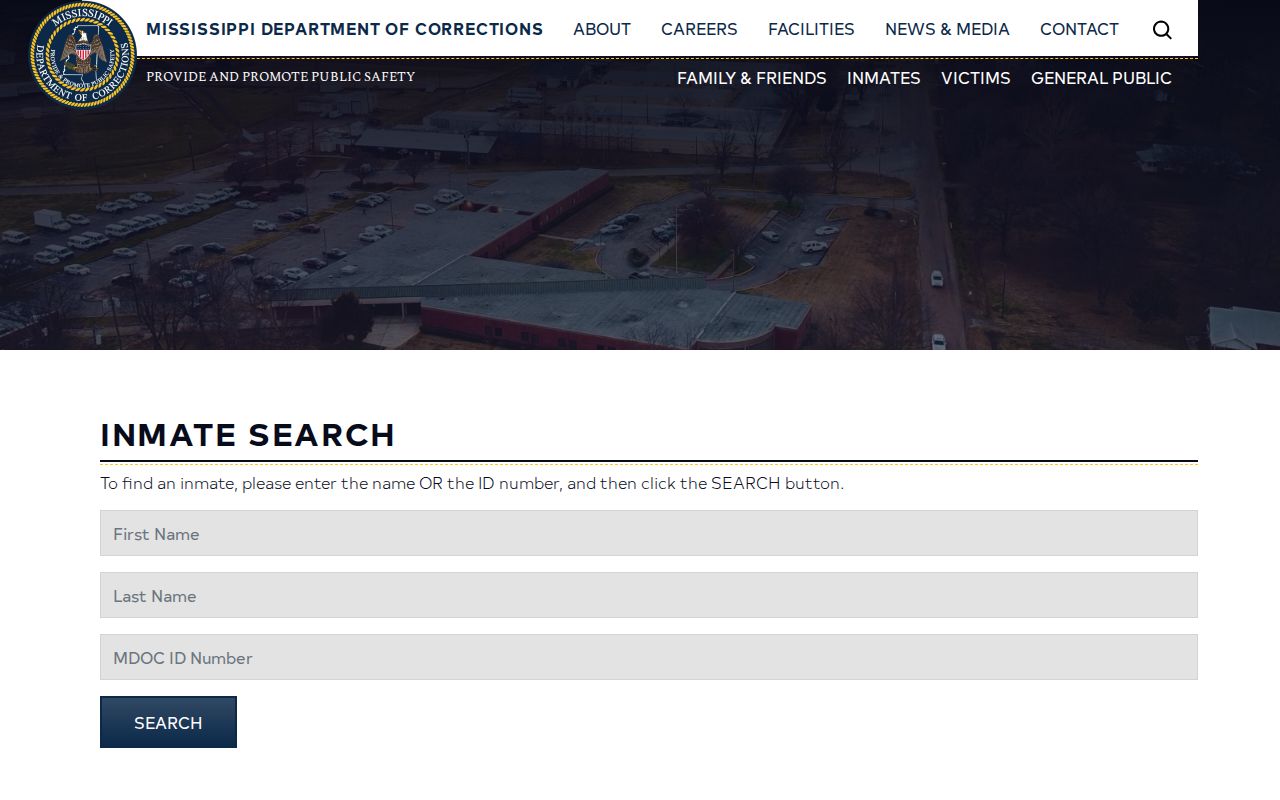
Opening the matching state record is necessary before reading its sentence and tentative-date fields.
Marion MDOC Release Record Fields
An official MDOC detail record can display name, photograph, MDOC ID, date of birth, physical descriptors, Entry Date, Location, Unit, Location Change Date, Number of Sentences, and Total Length. Sentence blocks may show offense, sentence length, county of conviction, and sentence date. Those fields help match the person and understand the source data. They do not independently prove the actual date or type of release.
The most important estimate is Tentative Release Date. A future tentative date indicates active sentence administration, not a promise that release will occur then. A past tentative date should not be converted into an actual exit. Check the current Location, the separate parolee route, and MDOC records. The printable official format warns that actual release dates and types can differ.
| MDOC field | Release-date use |
|---|---|
| MDOC ID | Matches the state correctional record more reliably than name alone. |
| Entry Date | Shows entry into the MDOC record, not the Marion booking date in every case. |
| Location and Unit | Show the reported state placement and help test whether custody continues. |
| Sentence blocks | Identify sentence date, length, offense, and county of conviction. |
| Tentative Release Date | Shows MDOC's current estimate, subject to validation and later change. |
The manifest image from an official MDOC detail layout confirms where sentence and tentative release information appears.
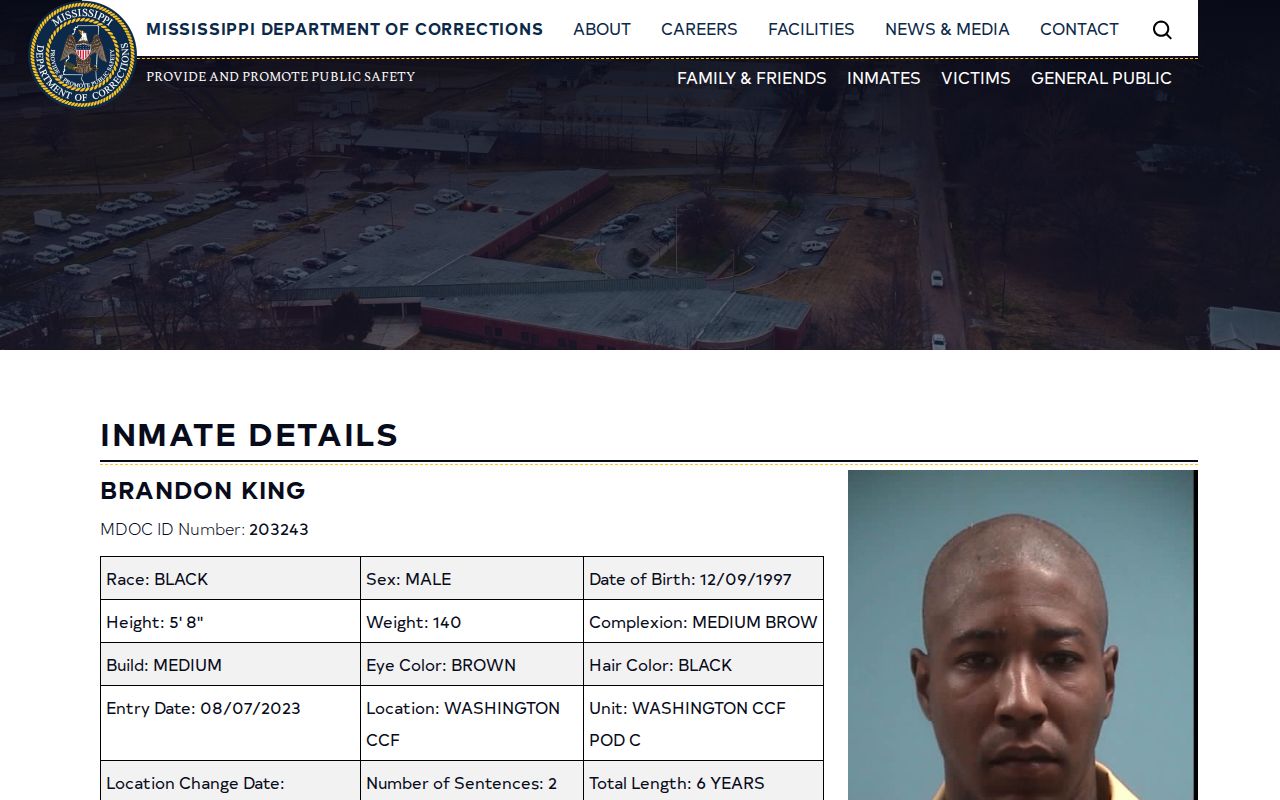
The detail layout must be read as a state corrections record, not as a Marion County jail release certificate.
Marion Release Dates and Earned Time
Miss. Code § 47-5-138 supplies the core ordinary earned-time rule for qualifying sentences imposed after June 30, 1995. It provides 4.5 days of earned time for each 30 days served for good conduct and performance, with a cap of 15 percent of the sentence. That cap creates the common 85 percent shorthand. It does not guarantee that every person leaves at exactly 85 percent.
Eligibility exclusions, lost credit, sentence structure, jail credit, disciplinary status, and other laws affect the result. Section 47-5-139 lists categories that are not eligible for earned release. Section 47-5-138.1 addresses trusty earned time, and § 47-5-142 addresses meritorious earned time. The correct current statute, sentence date, and MDOC calculation control. A public user should not try to replace the agency computation with arithmetic based on sentence length alone.
Eligible pre-sentence or pretrial Marion County jail credit can affect the sentence-begin date when it belongs to the current cause number and the legally relevant period. The judgment and MDOC time record are needed to see whether that credit was accepted. An estimate that omits a second sentence, a consecutive term, or a hold may be far from the processed result.
Note: The 85 percent shorthand describes a statutory cap for qualifying cases, not an individualized Marion County release promise.
Why Marion Tentative Dates Shift
Marion County release-date questions often cross the county and state systems. A person can earn county jail credit before entry into MDOC, and MDOC must connect that credit to the correct cause and sentence. The MDOC handbook explains that the agency computes sentence terms and establishes eligibility, tentative, and maximum dates. An incomplete or corrected judgment can therefore change a date even when the sentence length appears unchanged.
Release also requires record validation and practical processing. MDOC's official release guidance says exact release follows case-manager communication after travel plans are verified and the person receives a discharge certificate. The guidance describes 30 to 45 days of release processing in the MDOC context and notes that in-state bus travel may be arranged. Those state-prison facts must not be treated as Marion County jail release hours or transportation promises.
Changes to Marion Release Dates
A tentative release date is recalculated from the record MDOC has at that time. New or corrected source documents can move it. So can earned-time changes, another sentence, a detainer, or a decision about conditional release. Each factor should be traced to a document rather than guessed from the calendar.
Parole and ERS also require precise language. Parole follows a Board decision. ERS is conditional release under MDOC jurisdiction. During ERS, the person retains inmate status while being supervised in the community until sentence expiration. An ERS start can be an actual community-release event without being a final discharge.
| Factor | Possible effect | Record to check |
|---|---|---|
| Jail credit | Changes the sentence-begin calculation when accepted | Judgment, cause number, and MDOC time record |
| Earned-time status | Adds, removes, or limits eligible credit | MDOC computation and applicable statute |
| Concurrent or consecutive terms | Changes how multiple sentences run | Court judgments and sentence blocks |
| New sentence or detainer | Can delay community return or send custody elsewhere | New case and receiving-agency record |
| Parole or ERS action | May begin conditional community release | Board action or MDOC status record |
| Administrative validation | Corrects a tentative date before processing | MDOC Records response and discharge certificate |
Marion Jail Versus MDOC Dates
Marion/Walthall County Correctional Facility has a mixed regional role. Two people at the same physical facility may have different release records. A person held on local authority may leave through bond, dismissal, time served, a court order, or transfer. The permanent Marion jail docket should carry the discharge date, and the inmate case file may supply the release authority or destination. A transfer means custody changed hands.
An MDOC prisoner needs the state search, time record, and discharge path. Marion County of conviction, Marion/Walthall as location, and a local booking are separate facts. Ask which authority held the person at departure. If MDOC accepted the person after local custody, the local roster may end while the state sentence continues.
| Situation | Date source | Final check |
|---|---|---|
| Local pretrial detainee | Court order and jail processing record | Marion jail docket and any receiving agency |
| Local jail sentence | Judgment, credit, and jail record | Actual discharge entry |
| MDOC sentence | Tentative Release Date and time record | MDOC status or discharge certificate |
| Federal sentence | BOP locator and federal judgment | BOP status and federal docket |
Confirm Marion County Release Dates
For MDOC time, jail-credit, or eligibility questions, contact the MDOC Records Department at P.O. Box 24388, Jackson, MS 39225, 601-933-2889, or MDOCRecordsDepartment@mdoc.state.ms.us. Ask for the exact status record, time sheet, or discharge certificate that answers the issue. For a Marion local release, send the sheriff's official request form by U.S. mail and seek the jail-docket entry, actual discharge date and time, release authority, and receiving agency when transferred.
A pending event can also be monitored through the Marion County VINE inmate check. VINE is useful for a release or transfer alert, but the source agency still confirms what happened. When records conflict, compare identity, retrieval time, and the meaning of each timestamp. Do not flatten tentative, eligible, maximum, actual release, and final discharge into one date.
The strongest answer is a short chronology: court authority, agency calculation, processed exit or transfer, any community supervision, and final discharge. That chronology keeps a projected estimate from being mistaken for a past event and keeps a Marion roster disappearance from being mistaken for freedom.